Indoor Cat Enrichment: DIY Toys, Routines & Home Setup
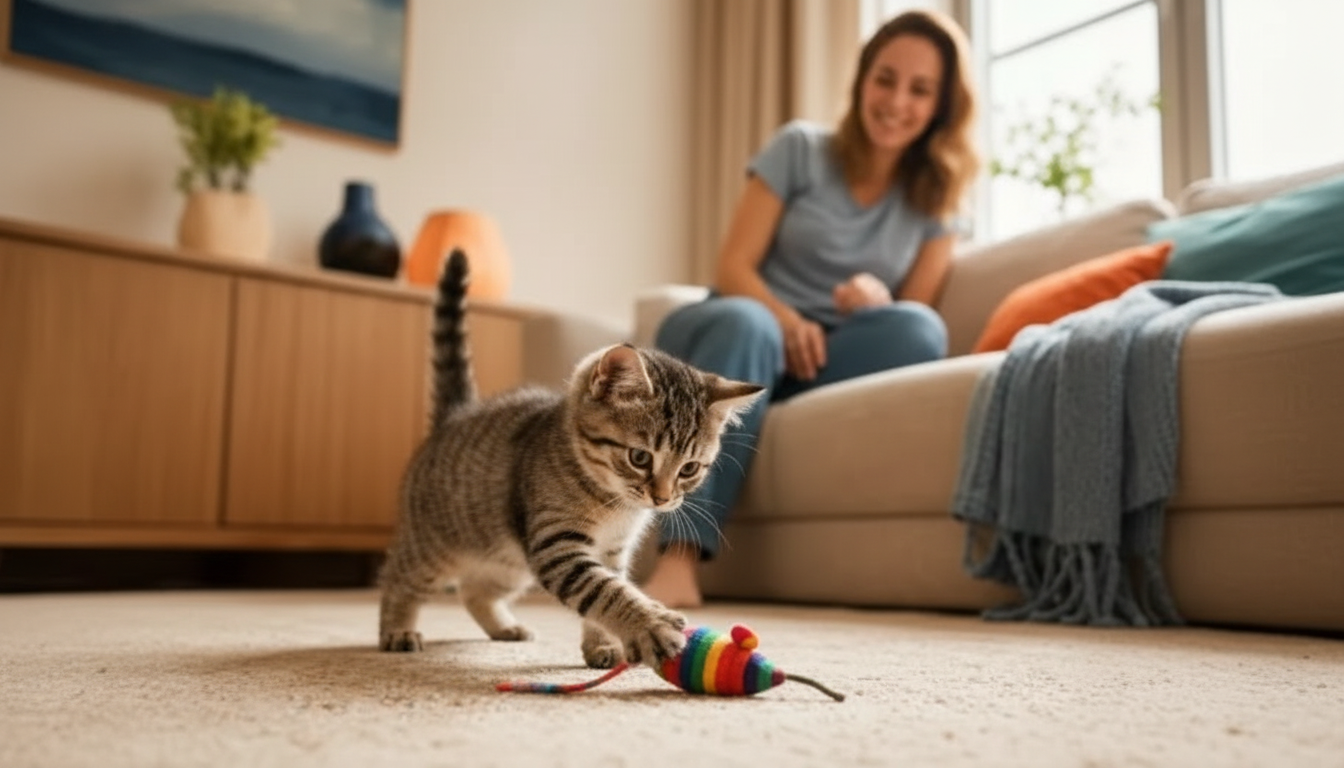
Enrichment Ideas for Indoor Cats: DIY Toys, Play Routines, and a Cat-Friendly Home
Indoor cats thrive when their days include hunting-style play, climbing, scratching, problem-solving, and calm places to rest. A few small changes—rotating toys, adding vertical space, and building short daily routines—can reduce boredom behaviors (night zoomies, over-grooming, yowling) while supporting healthy weight and confidence.
What “enrichment” means for an indoor cat
Enrichment is anything that helps a cat safely express natural behaviors—without turning the home into a constant “party.” The goal is a balanced day: engaging activity, then true downtime.
- Meet core needs: hunt, climb, scratch, hide, observe, explore, and rest undisturbed.
- Balance stimulation with recovery: short, intense play followed by food and a nap mirrors a cat’s natural rhythm.
- Use variety, not constant novelty: rotating a few options weekly can be more effective than leaving everything out.
- Watch your cat’s style: “stalkers” like slow wand play; “chasers” enjoy quick darts and fetch; anxious cats do best with predictable, low-pressure activities.
Set up a home that invites natural behaviors
Your layout can either make a cat feel confident—or trapped. Simple environment upgrades often reduce “problem” behaviors faster than adding more toys.
- Create vertical routes: use a cat tree near a window, shelves, or sturdy furniture paths so your cat can travel without being cornered.
- Offer multiple scratching stations: include at least one tall vertical scratcher and one horizontal scratcher in high-traffic areas.
- Make safe hiding and resting spots: a covered bed, a box with a blanket, and an elevated perch away from household noise.
- Boost window enrichment: a comfy ledge, occasional open blinds for visual interest, and (where safe and legal) an outdoor bird feeder placed to minimize wildlife risk.
- Keep it cat-safe: secure cords, avoid dangling blind strings, store toxic plants, and choose stable furniture for jumping.
For deeper guidance on feline environmental needs, see resources from International Cat Care and the American Association of Feline Practitioners (AAFP).
DIY toys and low-cost enrichment that actually gets used
The best DIY options mimic prey movement, encourage “foraging,” or create cozy hideouts—without adding clutter. Keep sessions supervised when there’s any chance of shredding or swallowing.
- Paper-bag and box playground: cut small doorways, add tissue paper (no strings), and rotate locations weekly.
- Toilet-paper-roll treat puzzle: fold the ends, poke a few holes, add a few kibble pieces; supervise to ensure it isn’t shredded and swallowed.
- Sock “kicker” toy: fill a sock with crinkly paper and a pinch of catnip (optional), tie off securely; replace if it tears.
- Wand toy refresh: swap the lure (feather, fabric strip, faux-fur) to change the “prey” pattern without buying a new wand.
- Scent enrichment: rub a tiny bit of silvervine/catnip on a scratcher, or introduce safe new smells (new cardboard, a clean towel from another room) in small doses.
- Food enrichment: scatter feed a portion of kibble, use puzzle feeders, or hide tiny portions in multiple locations to encourage “foraging.”
Simple play routines that fit real schedules
Short, repeatable routines usually beat one long play session—especially for cats who get overstimulated. Consistency builds anticipation and reduces random attention-demand behaviors.
Example weekly enrichment rotation (mix and match)
| Day | 5–10 minute play | Food/puzzle activity | Home environment add-on |
|---|---|---|---|
| Mon | Wand toy “bird” pattern near floor and up a perch | Treats hidden in 3 easy spots | Open a new box with one entrance |
| Tue | Ball chase or hallway fetch | Kibble in a DIY roll puzzle | Move scratcher closer to favorite nap area |
| Wed | Slow “mouse” stalk-and-pounce | Lick mat with wet food (thin layer) | Window perch time with blinds raised |
| Thu | High-energy sprint play (short bursts) | Scatter feed in a snuffle mat | Add a blanket fort hiding spot |
| Fri | Climbing play: lure up/down cat tree | Puzzle feeder at dinner | Rotate 2 toys back into circulation |
| Sat | Interactive chase with pauses to “catch” | Treat hunt in paper cups | Change a perch location for a new view |
| Sun | Gentle session + brushing if enjoyed | Small training treats for 3 cues | Quiet rest zone refresh (clean bedding) |
Train-to-enrich: quick skills that build confidence
Common boredom signals and what to change first
- Nighttime zoomies: add an evening play session + a small meal, dim lights, and keep a predictable wind-down routine.
- Over-grooming or agitation: increase predictable hiding/rest areas, reduce noisy play, and consider more puzzle feeding.
- Furniture scratching: place a scratcher directly on the problem spot, reward use, and try different textures (sisal, cardboard, carpet-free).
- Counter surfing: add legal “up” spots (stool/perch), increase foraging activities, and remove food cues from counters.
- Sudden or severe changes: schedule a veterinary check to rule out pain, illness, or stress-related issues (the ASPCA cat care resources can help you spot what’s normal vs. concerning).
A printable guide can make routines easier to stick with
For an easy done-for-you routine, see the Enrichment Ideas for Indoor Cats | Printable Cat Enrichment Guide | DIY Toys, Play Routines, and Cat-Friendly Home Tips.
If you’re planning a new cat’s setup (or resetting routines after a move), the Are You Ready? Pet Adoption Decision Workbook | Printable Pet Adoption Guide can help map out daily care, home zones, and realistic time commitments.
FAQ
How do I create enrichment for my cat?
Combine three elements daily: (1) 5–10 minutes of hunting-style interactive play, (2) a food challenge like puzzle feeding or treat hiding, and (3) an environment option such as a perch, scratcher, or hiding spot. Rotate options weekly and end play with a small meal or treat to complete the hunt cycle.











Leave a comment